This is a review by Kathy Moore of the book ‘The Green Ages: Medieval Innovations in Sustainability’, by Annette Kehnel.
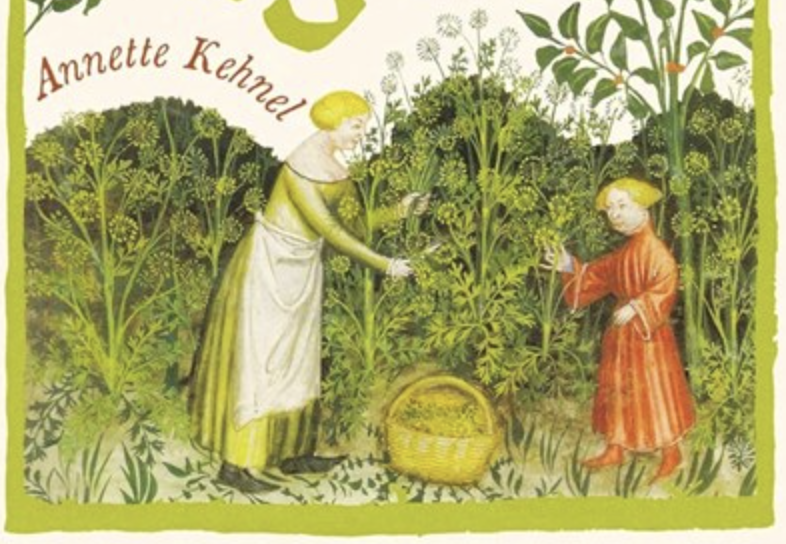
This brilliant book’s aim is a familiar one to us: to imagine a possible future by learning from and re-examining the past. Written in German, published there in 2021, and translated and published in English late last year, it chimes so well with CMUK’s work and ideas, posing questions like “What would our ancestors suggest…?”
Medieval people were better at long-time thinking than we are today as they were concerned to sustain their local ecosystems so that their children could benefit from them. The original title of the book written in German translates as “How it can be otherwise?” and shows us that we did and can, do things differently.
Kehnel starts by saying “The trouble is, we are attempting to solve the problems of the future by using ‘modern’ strategies”. As a historian, she is using (late) ‘modern’ to mean nineteenth-century-i.e. around 200 years old. Instead, Kehnel suggests the 21st century needs grand new narratives. We need stories that help us to overcome the challenges of the 21st century not the 19th. As our solutions to these challenges begin to emerge, we should be encouraged and inspired by the echoes from medieval history.
The book promises we will “encounter people who used to tell each other very different kinds of stories, managed their economies in their own way and overcame all manner of crises… travelled to all four corners of the world, set up communities, ate vegetarian food and lent each other money.” We do indeed discover inspiring communities, individuals, attitudes and ideas throughout her themes of sharing, recycling, microfinance and minimalism. We are left realising and wondering why historians have missed noticing and remarking on many of the sustainable practices of our ancestors. Second-hand trading and skilled repairers were integral to the medieval economy but are rarely documented and explored by historians. Until relatively recently all paper was a recycled product (possibly the original one?). She even touches on some surprising implications for this topic, of the history of sitting on chairs!
We are reminded that medieval people understood and legislated for sustainable and shared management of natural resources like timber and fish harvests, motivated by economic common sense; the need to maintain supplies and avoid shortages.
Kehnel questions why we are now stuck in the mindset of modernity with its fixation on “progress “and suggests History offers us a path out of this paralysis. She challenges “modern” paradigms, dispels the myth of the Tragedy of the Commons and invokes some of the alternative economic ideas such as Limits to Growth and Doughnut Economics. Kehnel is constantly looking back and forth across time in Europe weaving great stories and asking many questions. Is Offsetting the new Indulgences? Is Upcycling the new Frippery?
The numerous and inspiring examples and evidence in the book are almost exclusively from continental Europe. We really need a companion to this focusing on the British Isles. I’m not a historian but I imagine there will be both significant similarities but also major differences in medieval life on either side of the North Sea and channel.
I wondered whether there might be a British equivalent of the Beguinages that feature in the book. I have found this article in the Norfolk Record Office blog which suggests there may have been something like them in (yes you guessed it, our beloved) Norwich. Could this be because Norwich had such a close relationship with medieval Flanders where Beguinages were widespread?
Let’s find more examples in our history that can inspire a reimagining of our communities.
See Bridget’s work with communities in Norwich, tapping into its radical heritage to imagine a safer and greener future, Possitopia Norwich.
For an insight into this book, Annette Kehnel talks about her book on the Medieval Podcast:
 Climate Museum UK
Leave a comment