There is increasing understanding of strategies people use to cope with the Emergency. This often draws from psychological work into how people cope with conflict trauma or serious illness, applying this to experiences of climate disasters or more broadly to the planetary Emergency. Of course, psychological studies and therapies are more prevalent in the Global North, where more people are experiencing Pre-Traumatic Stress Syndrome of anticipating future catastrophe than the direct impacts that affect people in the front lines.
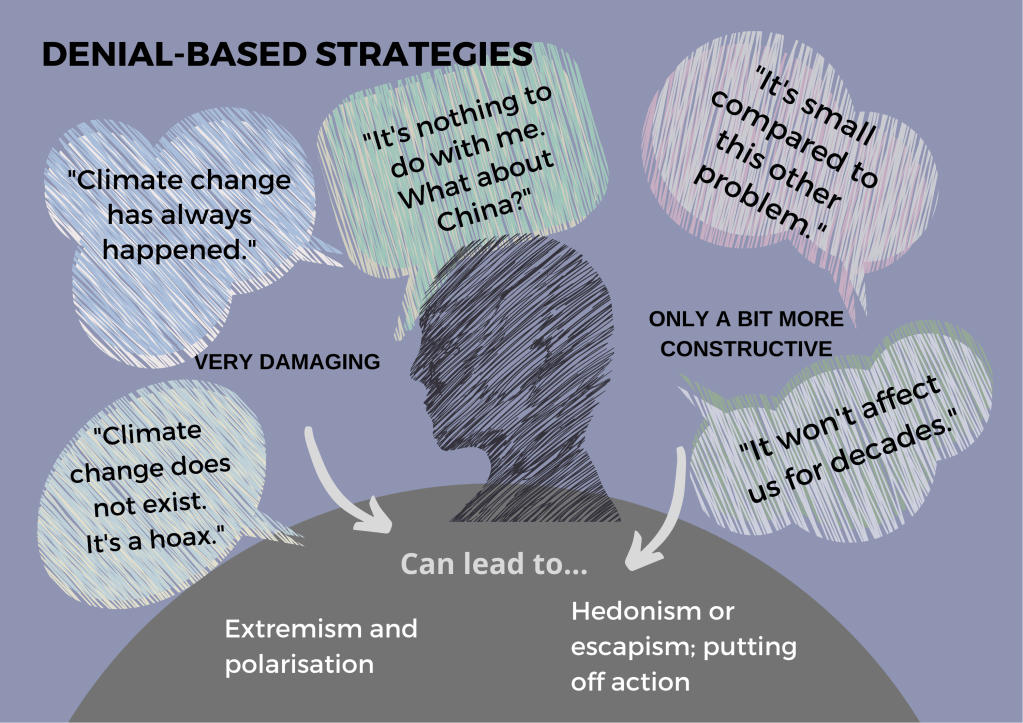
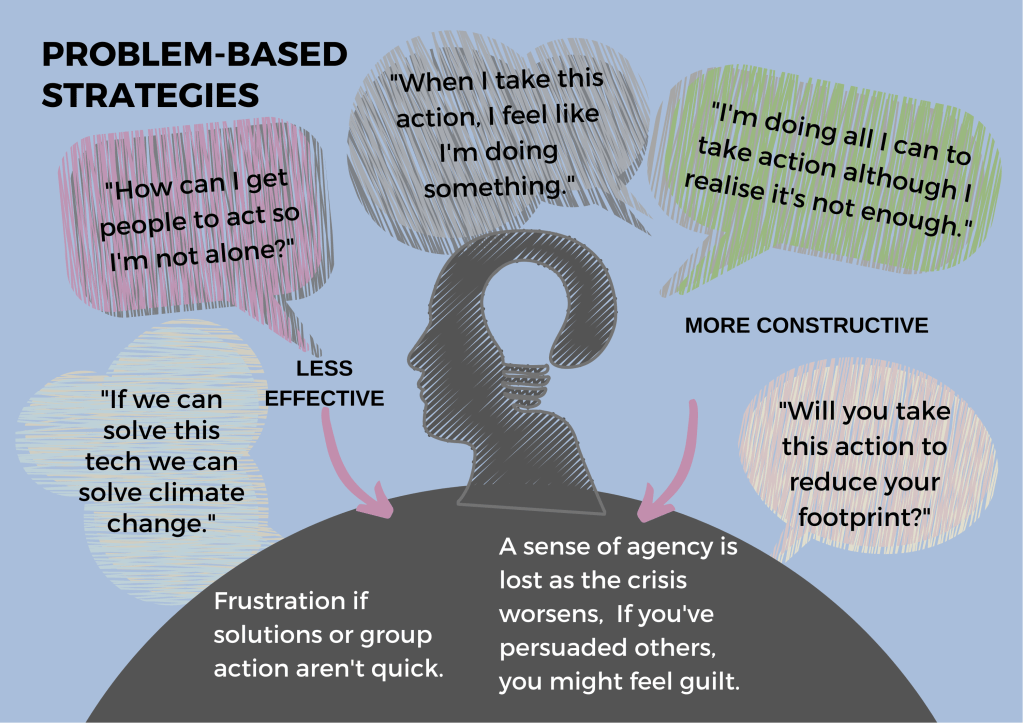
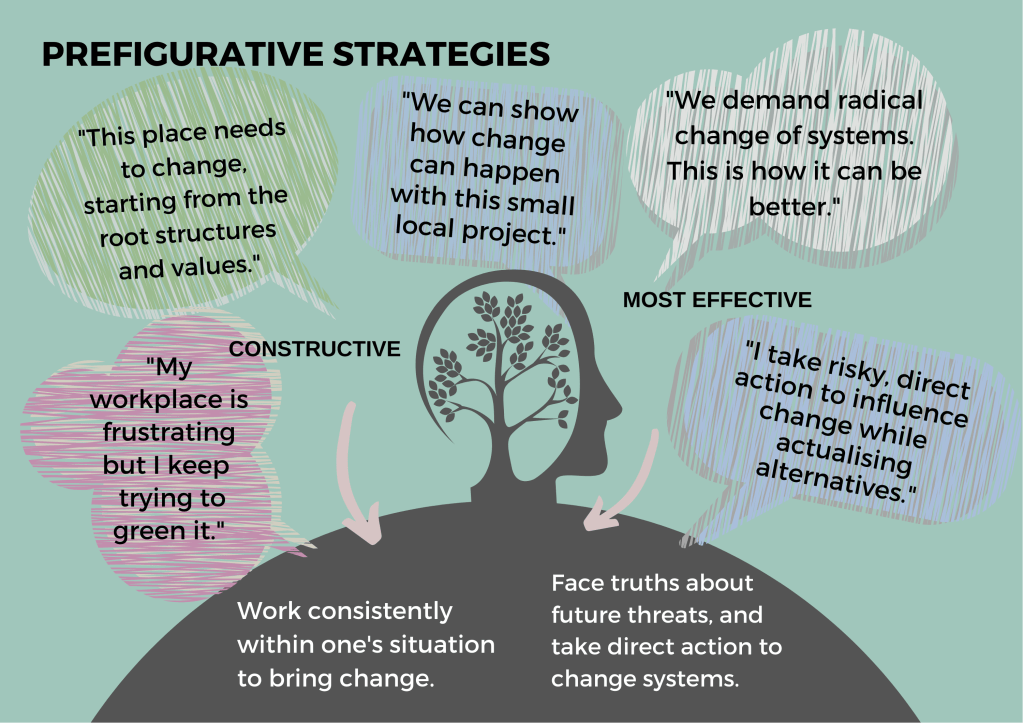
These five cards pull together some of what is known and codify these Coping strategies. Analysis is based significantly on this article by Maria Ojala @iaojala, which focuses on young people but draws on studies about both adults and young people. The cards illustrate some of the strategies mentioned in this article, and also by Renee Lertzman and others, using quotes. The Denial-based strategies are the most common, and the most ineffective at bringing wellbeing for self and others. The Problem-based and Meaning-based strategies are those most often promoted as effective. However, they may not be as constructive as possible, given the worsening situation. The most constructive are Prefigurative strategies, especially when combining experiments in living (e.g. ecological food production) with Non Violent Direct Action. In the last card, this is described as resulting in Apocalyptic Activism.
We’re carrying out research on climate emotions and coping strategies, and we invite people to do this short survey. We’re also thinking about how these coping strategies can be explored in creative activities in our pop-up museum activities. Your thoughts would be very welcome.



 Climate Museum UK
Leave a comment