Dear friends,
Welcome to our Autumn newsletter, one of our quarterly newsletters planned around the solstices and equinoxes of the year.
This newsletter focuses on Extreme Weather Stories, a Climate Museum UK project that collects experiences of climate impacts. This has been an El Nino year, which exacerbates disruptions to the climate, so we’ve recently witnessed an incredible and devastating series of heatwaves, wildfires and storms. As we pointed out in our Summer newsletter, the first stage of abrupt climate catastrophe has already begun. This project hopes to help capture and call attention to these early signs of change in our Earth’s weather systems.
Below we explain about this project and how we want to develop it, and share some recent stories with you. And as always, we’ve also included some updates from our Associates so you can connect with Associate projects around the country.
About Extreme Weather Stories
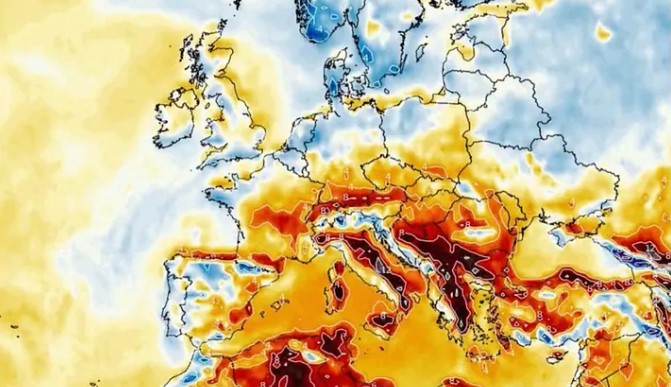
MetDesk forecast map 16th July 2023, image source: wxcharts.com
Climate Museum UK’s Extreme Weather Stories project is a multi-author platform which supports a growing collection of extreme weather and climate impact accounts. There are several reasons to capture these stories:
- To share them to increase public awareness e.g. of the links between extreme weather and global warming caused by polluting & ecocidal activities.
- To amplify the experiences of people and biodiverse life, to increase empathy, direct aid and recovery efforts.
- To provide opportunities for emerging creatives, scientists and journalists to explore ways of responding to and reporting on climate change.
- To provide an archive of stories for the future, and for researchers and educators, interested in climate communication.
The stories published here might be:
- people writing from their own first-hand experience about a particular event, or place, or the impact of extreme weather on their lives;
- an author interviewing someone or several people about their first-hand experiences, or writing about someone else they know, perhaps reflecting on events in the historic or recent past;
- reflecting on several stories as found in media, including social media;
- reflecting more abstractly about extreme weather and climate impacts, whether fast disasters or slower impacts, how we understand it through stories, the value of witness accounts and so on;
- interesting uses of creativity and digital methods to capture extreme weather, in data, photography, writing and immersive re-creations.
We’d like to develop this so that there are small grants for people, from anywhere in the world, to be able to contribute high quality articles and creative writing / digital content.
Ways to Participate in Extreme Weather Stories
- We publish Extreme Weather Stories on our Medium publication. We can post them for you, or if you have a Medium account, you can ‘add them to the publication’. If you would like to contribute articles or creative content to this platform, please get in touch on climatemuseumuk@gmail.com.
- To share anything relevant, tag us using #ExtremeWeatherStories on social media, and using our profile handles on Instagram, Twitter or Facebook.
- To see all of the stories, go to the publication Archive, and click through each year at the top.
- You can also find a collection of 500+ Extreme Weather Stories on Pinterest.
- We also invite you to write posts, such as reviews of climate & nature-related exhibitions, campaigns, books or events on our main blog. As an example, see the latest ‘What is a “Nature Person” and does it matter?’ by Mary White.
Recent Extreme Weather Stories
Living with Wildfires, Ann Borda
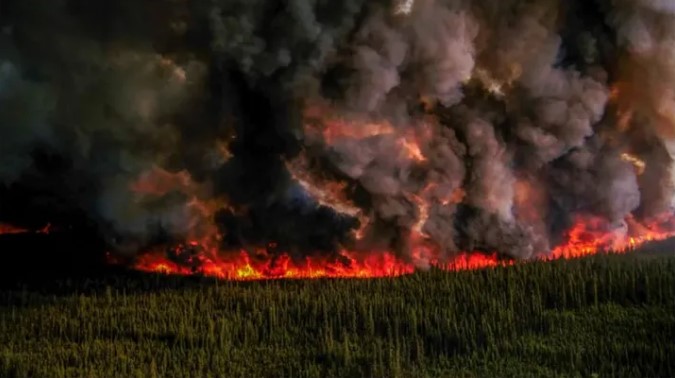
The Donnie Creek fire, image source: Radio Canada
From beyond the UK, our new associate Ann Borda is currently living in British Columbia, Canada. She has written two posts, the first about Living with Wildfire, and a subsequent account as the wildfires in Canada continued to rage. Her second piece explores the Inside and the Outside of the situation, including how we might connect to our grief and work for climate justice. Read here
Extreme Weather Experience, Rupert Read
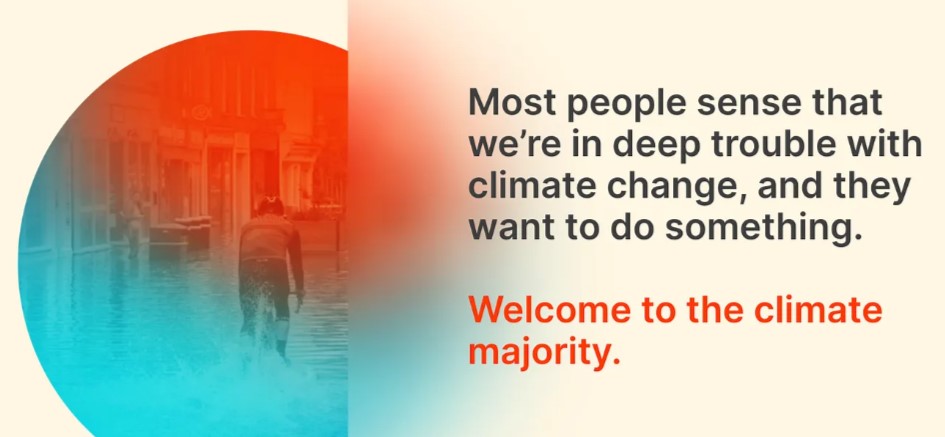
Image and text from Climate Majority Project
Rupert Read, founder of the Climate Majority Project, shared this story on his Facebook profile and WhatsApp, inviting it to be shared.
“Friends, I need to share with you a terrifying experience that Juliette and I just had….” Read here
Devastation in Libya, Bridget McKenzie

Satellite image of Storm Daniel from The Guardian
A piece by Bridget McKenzie signposting some different digital media and expressive responses to the devastating floods in eastern Libya.
“The phrase rolling in my head is “I told you so”. But, I don’t think I could have done. These long-lasting widespread fire seasons, these record-breaking heatwaves, these rain and hail storms, all over the planet including Europe, have been so unpredictable. Did anyone really tell us so?” Read here
Using Theatre to Explore Unlivable Heat, Molly Anne Sweeny and Sofia Bagge
Our Associates Molly Anne Sweeney and Sofia Bagge (Wise Ram Theatre) have just started a new collaborative project with researchers at The Institute for Risk and Disaster Reduction at UCL called “Using Theatre to Explore Unlivable Heat”. It is funded by UCL Culture through Performing Planet Activism.
In this guest post, they ask “How can theatre be used to communicate extreme and unlivable heat? Is theatre a useful medium for this?” Read here
News from our Associates around the Country
Possitopia Norwich
Bridget McKenzie has been busy setting up the local programme in Norwich under the CMUK umbrella, working with other Associates. See the Possitopia Norwich festival of workshops for local Associates and friendly organisations.
Falmouth Art Gallery Study Day
Kathy Moore responded to a request from Falmouth Art Gallery to Climate Museum UK to present at a study day on loans. On the back of practical advice and discussion about Environmental Responsibility and Loans, Kathy will be introducing them to CMUK’s work and getting them to think about how loans can enhance climate storytelling in museums and galleries.
The Ripple Effect Exhibition, Salisbury
James Aldridge has been working with Wessex Archaeology and the Environment Agency on The Ripple Effect Project for the past two years. Supporting local people to learn about the past, present and potential future of the River Avon through creative engagement with the river and its natural/cultural heritage.
An exhibition sharing documentation and artwork from the project will run from 3rd November to 16th December at The Young Gallery, Salisbury. See James’ blog post for more information.
Statement from Culture Declares
Two of our directors, Victoria Burns and Bridget McKenzie, coordinate the movement Culture Declares. See their statement in response to Rishi Sunak throwing the environment on the political bonfire.
The Brink – Exhibition and Live Performance
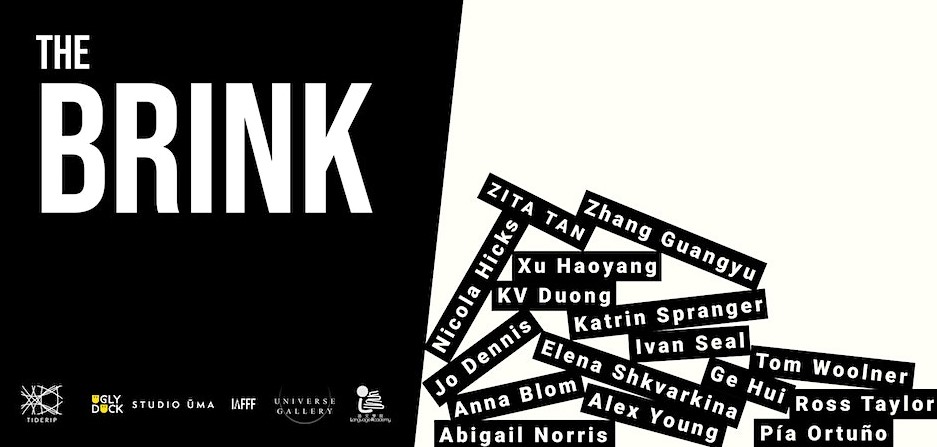
Our Associate Katrin Spranger has been collaborating with artist KV Duong to develop the performance Spillage. The performance will focus upon the Earth’s finite reservoirs of fossil fuels, notably oil, and our profound reliance on this resource, which subsequently triggers detrimental environmental consequences.
THE BRINK
7–9 October 2023
Ugly Duck, 49 Tanner Street, SE1 3PL, London
Private View: Saturday 7th October, 3 pm-9 pm (Spillage live performance at 4 pm)
Exhibition dates: Sunday 8th October (12 pm-6 pm) & Monday 9th October (12 pm – 4 pm)
Entry is free. Registration is required only for the Private View – booking link
 Climate Museum UK
Leave a comment