Welcome to our Winter newsletter, one of our quarterly newsletters planned around the solstices and equinoxes of the year.
This newsletter focuses on our Possitopia principle and how this is being explored in Norwich. And as always, we’ve included some updates from our Associates so you can connect with our activities around the country.
To share any of these stories on social media, please tag us using our profile handles on Instagram, Twitter or Facebook.
What is Possitopia?
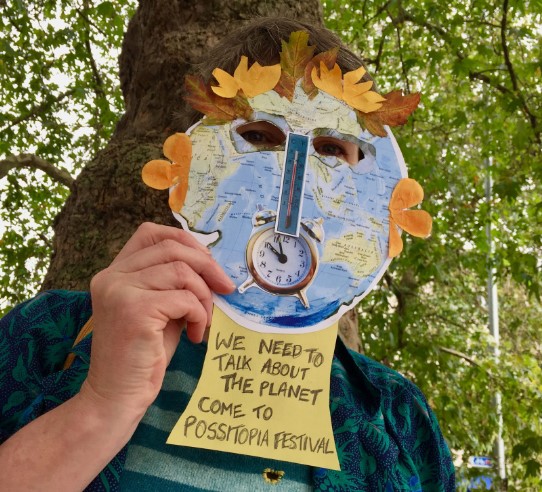
Possitopia is a possible place. It is better than Utopia because it’s a world we can really make, if we can imagine it, and it responds to the real challenges facing our planet. It’s also better than a Dystopia because it can be healthy, green, caring and safe.
The Possitopian approach to future thinking expands the cone of the possible future, draws on geophysical realities and data, and also applies imagination to help you imagine future scenarios which are potentially worse or better than you might allow yourself to think. It’s definitely not being ‘Positopian’, or relentlessly positive about the future without facing realities of Earth crisis impacts.
Possitopia Norwich
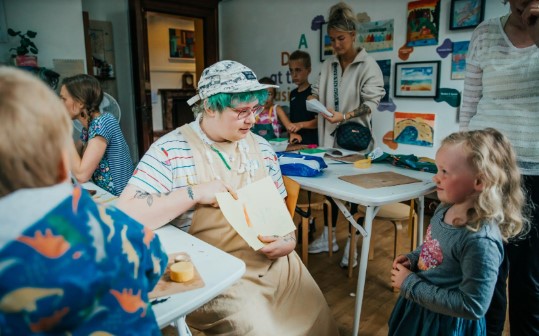
Bridget McKenzie has been busy setting up the ongoing Possitopia Norwich programme under the CMUK umbrella, working with CMUK friends and associates in Norfolk. A highlight was the Possitopia Festival throughout November 2023 and across the city of Norwich. There were 33 events and creative activities to imagine and build the future people want to see for the place and the planet.
The activities were led by our associates and some of our partners, already working to help people act for a safe and healthy world, and it took place in a range of venues across Norwich throughout November. The partners include Norwich Eco Hub, Norwich Climate Commission, Edible East, SYSTA, We Wear The Trousers, Under Open Sky, Norfolk & Waveney Mind, the Norfolk Green Care Network, the Sainsbury Centre for Visual Arts and more. They share the goal of helping people know what they can do, to be more active and empowered to look after each other, live more healthy lives, develop innovative green businesses, access affordable local food and energy, and be protected from climate impacts such as flooding, wildfires and rising food prices.
Bridget gives a hint of what happened: “photography walks, workshops making paper or exploring happiness, the launch of an alternative fashion school, or inviting public views on how to spend £274 million that Norfolk council wants to spend on the habitat-destroying Wensum Link Road. I’ve run a collage workshop exploring eight pathways people can take action in the crisis. With Nick Brooks I ran a workshop with many organisations working for climate resilience and adaptation in Norfolk. And there were Emergency Playdates, playing board games on climate and nature, and so much more…I feel more connected and less lonely acting in this more locally-embedded way and I’m excited about the potential to create a visitable space for Climate Museum UK in my city — in a shared building offered on a meanwhile basis by the council.”
More about Possitopia Norwich
- See and follow the Possitopia Norwich Instagram.
- See the album of photos of lots of the Festival events on Flickr.
- Watch this short film made by Fin Hanlon all about Possitopia, the recent festival and what more is to come, which was made for Culture Declares Emergency, and their call out for films to mark its 5th anniversary.
- Or you can read the script for this film here.
More Useful Guides and Tools
- People Take Action toolkit – Offers eight pathways for people to take action on the Earth crisis in any area of influence they have.
- Imagine Futures – A resource to help young people dream possible futures for themselves and their places, as well support educators, cultural workers and community leaders run a very similar workshop or develop their own project.
- Community Climate Action Toolkit – A community level resource supporting groups to understand their local situation and take meaningful action on climate change. Supported by the Schumacher Institute.
Eco Lens Tours of Norwich Museums
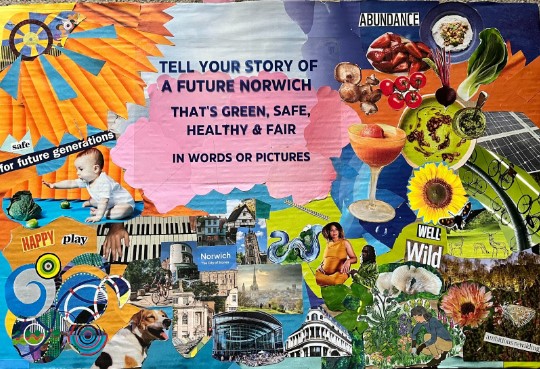
Kathy Moore ran events at each of Norfolk Museum Service’s three Norwich sites as part of the Possitopia Festival, and shares this account:
Each event was titled An Eco Lens on Heritage and explored different themes relevant to each site and its collections. I’m grateful to Norfolk Museum Service who allowed free entry to participants who had pre-booked places.
The first visit explored the Natural History Galleries at Norwich Castle Museum and Art Gallery. In 2009, I was part of the redisplay team for what had been the Mammal Gallery at the Castle so I could share insights into our approach, which included re-using as many fittings and recycled materials as we could. Many cases include Conservation Action Points and IUCN red list data (from 20029). The galleries celebrate two Norfolk naturalists Ted Ellis and Margaret Fontaine who are Possitopian. See more about them in these blog posts (Ted Ellis, Margaret Fontaine).
Our second venue was The Museum of Norwich at the Bridewell. We concentrated particularly on the Second City gallery. Norwich has a strong claim to have been England’s second city for much of the late Middle Ages and into the Tudor period. The galleries look at all aspects of life in the city. We looked at a range of maps from the one of the earliest known maps of an English city to proposed developments from the 1950s that never happened. We thought about what we wanted for a future Norwich and drew our ideas in map form. More on Norwich maps here
Lastly, we visited Strangers Hall, dating from 1320. With a complicated history, including that of its name and a varied collection on display, it provided lots of material for discussion. Wide-ranging topics included controversial stories like welcoming (or not) of refugees, a cash for honours story, how inhabitants of the house reused and recycled, kept warm, and filtered their water, and how the first curators founded England’s first Folk Museum. (I had to get at least one Norwich superlative in!) and current young curators are thinking about contemporary collecting. One of our favourite items in the famous toy collection at Strangers Hall, is brought to life in this video, found online after the event by one of the participants. Around 100 different and recognisable animals are a great example of Biodiversity!
A Possitopia Festival in Your Place?
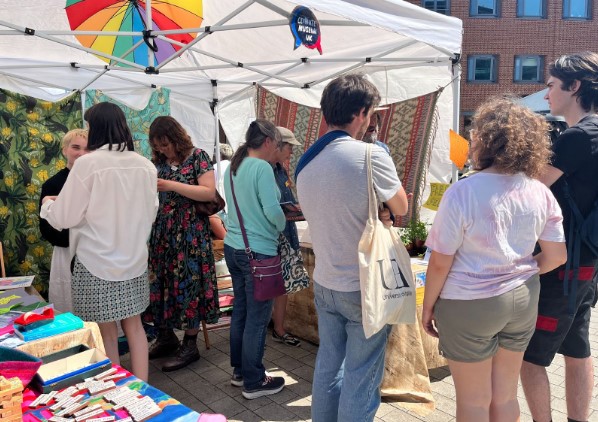
We’d love to see more Possitopia Festivals happening elsewhere. Here are some suggestions:
- Decide on its scale – will it be a single workshop event or a multitude? Ours was 34 events over one month but it doesn’t need to be that big.
- Decide on your main venues and partners. You might choose to focus on one venue, or hold events across a town or region to reach more people.
- Hold a meeting: share the idea of Possitopia, and the value of imagining and prefiguring possible futures in your place. Invite ideas for activities from your partners.
- If you don’t have funding, look for sources and make a fundraising plan. We were awarded £4,000 from Norwich Eco Hub, who had some National Lottery funds. We also ran a brief crowdfunder, supported by Aviva, raising £540. The money was distributed between partners to run their events, including venue hire.
- Decide on roles between you and call for volunteers – with clear tasks outlined: doing social media, making event posters, getting press coverage, supporting events, documenting and evaluating what happens.
- Let us know you’re planning to do it, so that we can share info. Credit us in your communications – stating that it is a Possitopia Festival inspired by Climate Museum UK, using this link to our website, using this hashtag #PossitopiaFestival, and tagging Climate Museum UK on Instagram.
- Produce a webpage and/or a Facebook page with all the event listings in one place, and ask your partner organisations to send emails to their audiences with the listings of all the events.
- The partners can also highlight their own events and focus on recruiting for them using Facebook events and Eventbrite to manage bookings for each event. We asked partners to fill in an online form (built in Google Forms) with all the details of events they wanted us to promote as part of the main listings.
- During the events, capture ideas and creative responses. Maybe compile them into a visual story or display to inspire others to take action and to imagine a greener, healthier, safer future of your place.
News from our Associates around the Country
Clémence Aycard, one of our Emerging Practitioners, has had the pleasure of recently becoming licensed as an Ecoanxiety to Agency Workshop Facilitator with Force of Nature. She’s hoping to soon be able to put her skills into practice, developing ecoanxiety programming for her home museum and local community. More about Force of Nature
Jaime Jackson is starting his Salt Road-led ACE-funded Sign of The Underground programme for the Sustainability not-for-profit Herefordshire New Leaf, commissioning Salt Road artists to create visual Biophilic (love of nature) artworks, co-production community workshops and exhibitions. Jaime will be working with The Society for the Protection of Underground Networks to create symbols to navigate underground and underwater tendrils connecting people and species, the rural and urban. Linking green public spaces across England from North Herefordshire to Birmingham and Kings Lynn. More about the project here
Justine Boussard is getting to work in her new home of North Tyneside. She recently ran a series of Amateur Ancestor interludes for the Blue Future Gatherings organised by Dr Suzy O’Hara at the Word in South Shields. These long time poetic interventions bookended the panel discussions about how creative practice can help deepen our connection with our coastal environments. If you’re in the North East, do drop Justine a line! hello@justineboussard.co.uk
Tamasin Rhymes has been working with Greener and Cleaner in Bromley to develop their co design strategy for events across 2024. These include Climate Fresk workshops with the help of a growing team of local Freskers, more about Climate Fresk here and Bromley workshops here. In Greenwich she has been founding Greener Greenwich Community Network and working on biodiversity events in the spring (February 17th) with Rich Sylvester. Email GGcommunitynetwork@gmail.com for more information
Victoria Burns, Climate Museum UK and CDE movement coordinator, has been mentoring curator Jayne Shipley of Scarborough Art Gallery. ‘A Space to Be’ was conceived as a safe, community space in the gallery following the pandemic. While planning the space, the team considered definitions of personal and community well-being with an expanded lens to include the climate and environment. They set out to explore how links could be made with some of the social justice issues that were faced by local communities to the climate crisis and climate justice in bottom-up and emergent ways. The work in the space has been included by Museums Development North West as an example of best practice when it comes to community engagement in climate the climate and ecological emergency.
As a result of this work, the communities engaged in the space are creating their own Culture Declares Hub in Scarborough, which will be informed by the same principles of direct democracy and reciprocity which have informed ‘A Space to Be’ from the outset.
 Climate Museum UK
Leave a comment