On the 28th June 2024, the ‘Eco, Young & Engaged’ (EYE) Project Summit 2024 took place in Shoreham, East Sussex. This was an event where local schools, upper primary and secondary, could attend various workshops and talks aimed to inspire, educate and empower young people to climate action. It was a great pleasure for us in Climate Museum UK to be invited alongside other great environmental groups such as The Knepp Estate, Sussex Underwater and The Scrap Space.
The day started with introductory speeches from Tim Loughton, founder of the EYE Project and ex-MP for the Conservative Party, who introduced the brilliant spoken word artist, Woodzy. Woodzy performed his piece, A Letter to Mother Earth, a beautiful poem about human connection to nature, our continued destruction of vital biodiversity and questioning when it’ll hit us that our actions need to change. It was the perfect link to the Climate Museum UK workshop which too, focused on the human-nature relationship.
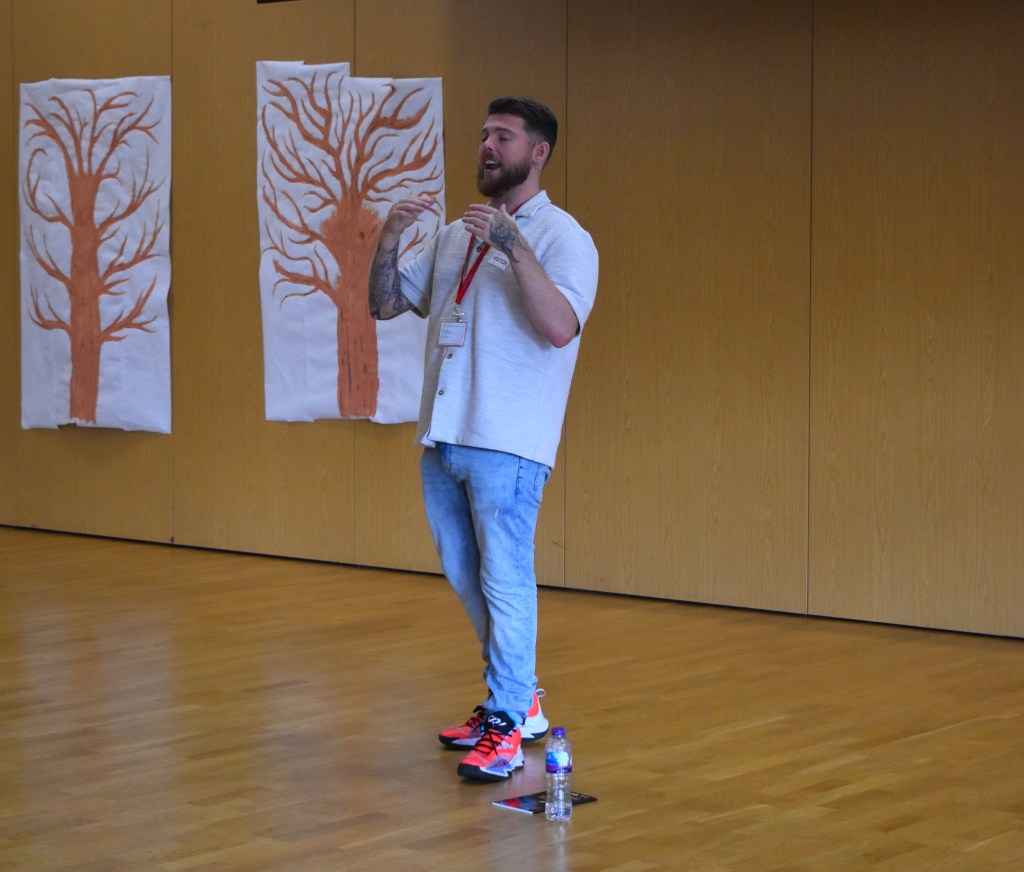
Climate Museum UK held three workshops for upper Key Stage 2 children from 6 different primary schools in West Sussex. The sessions were led by me (Tanwen Morgan) and co-planned with Kevin Campbell Davidson and funded by the wonderful Sussex Downs National Park. The thought process behind the sessions focused on the campaign, We Are Nature, a movement to get UK dictionary definitions of nature updated. The definition currently eliminates humans from nature,
“The phenomena of the physical world collectively, including plants, animals, the landscape, and other features and products of the earth, as opposed to humans or human creations.” Oxford Dictionary
The We Are Nature campaign argues that by withdrawing humans from the term nature it removes us from the natural world and negatively impacts our behaviour towards it. If we realise that we are nature, then humans will be more inclined to protect it now and for future generations (see their petition here). The main focus of our session highlighted the interconnection between humans and nature and the importance of seeing the world holistically. Kevin and I designed and created a series of posters with human organs as the central image, allowing the young people to re-imagine these organs as external natural matter.

The session, Humaninmals, started by introducing the concept of a play on words, which was revisited throughout. Young people were encouraged to question and discuss how we often see humans as the top of the hierarchy and the need to move to a more eco-conscious way of living. It reminded them that without living organisms there are no humans, and so to assume and accept that humans hold more importance is wildly problematic during the climate and ecological crises.
After looking at the We Are Nature campaign and their strapline, “We are a part of nature, not apart from it”, we built on how young people can participate in society and be activists too. We looked at the role of art in spreading messages about social and climate justice and how other artists have been inspired by nature. The main task of the session revolved around making their poster which students loved and appeared to be enthused at having the opportunity to think outside of the box. It was quite amazing to observe their creative freedom all based upon the same stimulus. Whilst they created their posters, we listened to a soundscape of nature (including human children playing in a park… because we are nature!). It was a calming and peaceful experience from the youngest year 3s, to the year 9 helpers and even teachers taking part in transforming the human organs into a wild variety of natural objects: vines, birds, elephants, trees and turtles, to name a few.
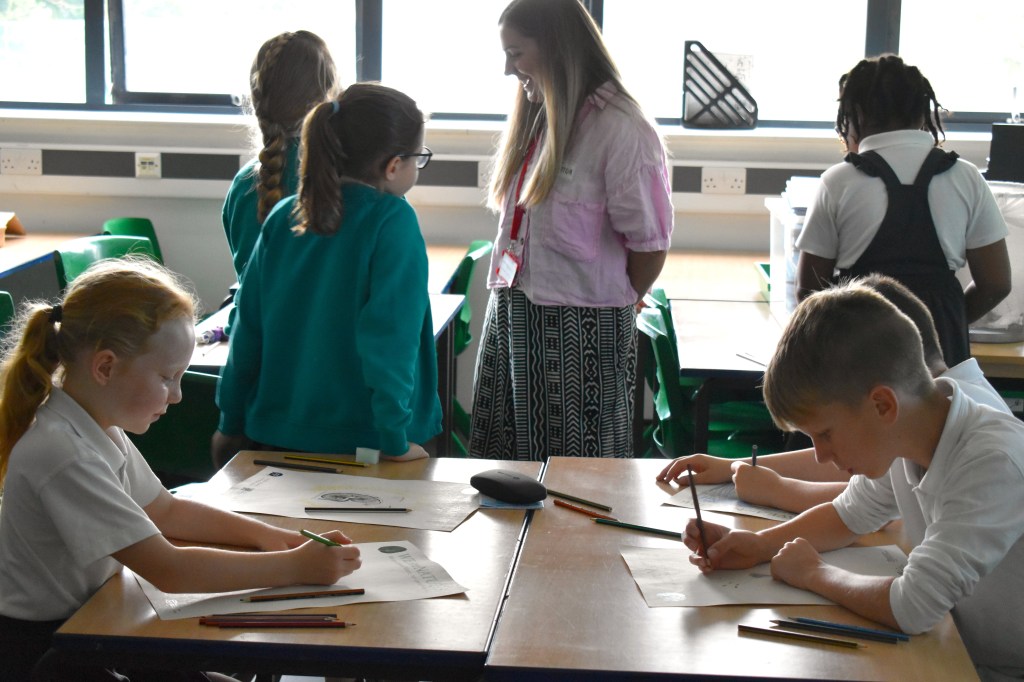
There was much thought and planning into the materials used. For example: the posters were printed on tree-free hemp paper; the pencils were made from reforested wood; and the posters were printed locally allowing for the collection to be on foot. This was a purposeful conversation that was had with the students. They loved holding their paper up to the window and seeing the plant fibres and upon finishing their pieces they were asked to sign their piece ‘Made by Nature and…’. These decisions reflect the ethos at Climate Museum UK where we act in Planet Kind; avoiding harm and waste in the ways we work.

The session finished by asking students to take on the role of a teacher and to bring the workshop back to their schools ready to share the message of the interconnection between humans and nature. Numerous students said it had been their favourite session of the day and all the teachers who took part in the workshop said they could see how it could be incorporated into their school and were keen to use the resources. The teacher resources and posters are free and kindly open to all, with much thanks to Sussex Downs National Park for funding its creation.
During the day, it was truly wonderful to see how much young people and their teachers wanted to find ways to embed environmental education into their learning. Days and experiences like this are brilliant to engage young people and hopefully, the message of We Are Nature will spread into their lives. However, it is imperative that educators (and the education system!) take brave and radical steps into this becoming part of everyday teaching. Young people deserve to learn the truth about the climate and ecological crises but this requires compassion and the use of holistic practices to hold and support them in this. If the education system continues to only brush the surface of environmental education, young people will be far from prepared to manage the complexities of planetary breakdown and its impacts on people across the globe differently. We need to do better as we surely want for them to be a part of the solution(s) for a more equitable and sustainable world.
 Climate Museum UK
Leave a comment