Autumn 2026
We missed our quarterly newsletter for the first time since 2020. We’re back with some news about our organisational review, our collective and individual projects, and some support for reflecting on the worsening Earth Crisis.
Reflecting on the future of Climate Museum UK
One reason for our pause is that we were reflecting – or composting, if you like. How can we respond to changing needs – rising trouble, reduced funding, and a more active eco-arts field? We want to consolidate what we offer to each other and our local and professional communities, while also growing in capacity to meet those changing needs.
We had a helpful day-long workshop facilitated by Emily Williams, during which we renewed our commitment to continuing this work and supporting each other through the seismic shifts we’re experiencing in real time. We’re now working on a few internal shifts and look forward to sharing our updated mission statement and new names once we’re ready!
Reflecting on the worsening Earth Crisis
This very hot and dry summer in the UK has layered on trouble to a wider background of increasing polarity, hateful politics, economic pressures and global conflict. We’re likely to see some horrendous climate situations as this Autumn’s El Niño unfolds. As a collective, we’re all experiencing intensifying emotions – ecological grief, numbness and distraction, future anxiety – and practical challenges. Here are two reflections that you might find helpful and supportive.
Collaborative Survival – a Queer River blog post from Artist James Aldridge
“I’ve been left reeling by the constant heatwaves and projections of a future in which the world will heat at a rate that frankly terrifies me. As a consequence, I’ve started to think about Collaborative Survival in an expanded way…I am starting to see what I do as a practice of collaborative survival, not only in terms of collaborating with other species to try and retain and regenerate as much as possible of the earth’s ecosystems, but collaboratively surviving with other humans in terms of our emotions.” James
Read on for his blogpost…
ON CHANGE, EMAILS & ROCKPOOLS
It’s been such a weird summer, hasn’t it? Clémence Aycard feels like she’s spent most of it with her head under water (literally and metaphorically). It’s passed by so quickly she now fears the dark months and the lack of vitamin D. She’s also happy that the droughts and news of fire are coming to an end, and is trying not to think of the floods to come. She’s spent her summer thinking and writing about eco-emotions, for a project soon to be announced (stay tuned!). In between, she’s taken a lot of time off by the waves, and taken advantage of her numerous ‘out of office’ emails to share joy. Throughout the summer, people emailing while she was away received quirky lists of interesting facts, awe-inspiring animal videos and lovely tunes – all meant to help them catch a breath, even for 5 minutes. The average emission of an email is about 0.3g CO2e, so why not at least make those mandatory but annoying ones more interesting with live cams of puffins?
As summer comes to an end, Clémence reflected that the time taken to curate those lists helped her feel better, by remembering all the fun, beautiful, exciting things happening in the world at any given moment. There were too many amazing things discovered over the summer to share them all here, but one of her highlights was definitely the adventures of Gerald the Periwinkle, a series of short rockpool clips shared by the National Trust. Aside from their fun captions, they are a great reminder to take time and observe the little creatures. Enjoy!
https://www.youtube.com/shorts/HvVuzF2yBeA
Climate Museum UK projects
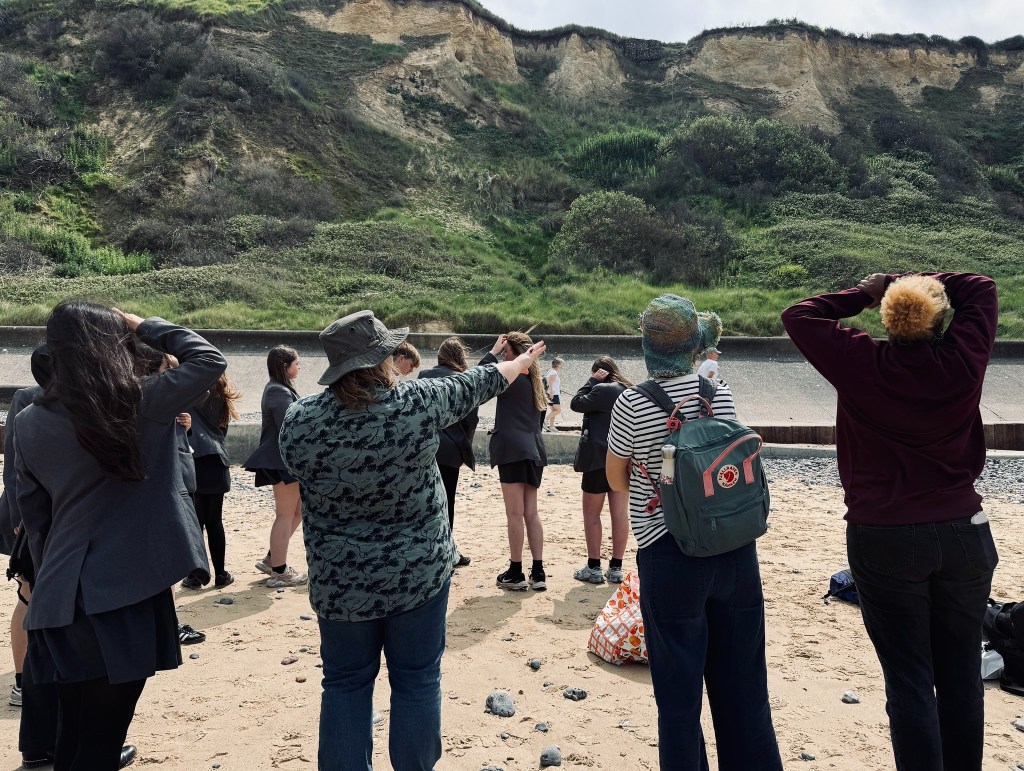
WE ARE THE SHOAL: An art-science project about climate change over time and human interactions with the marine ecosystem of Cromer Shoal, Europe’s longest chalk reef. Bridget McKenzie and Kathy Moore from Climate Museum UK and Cromer Museum worked with students from Cromer Academy, supported by the Coastwise team who help communities in North Norfolk on the front line of coastal erosion. We will share more info when the exhibition at Cromer Museum is scheduled.
REIMAGINE COMMUNITY
We’re part of a Lottery-funded project working with six delivery partners and Reimagine Norwich to run 24 activities on food security and the sharing economy. We will create a display with interactive materials such as tablecloths and card sets, accompanying these activities over the next two years.
Independent news from our members
EARTH TALK
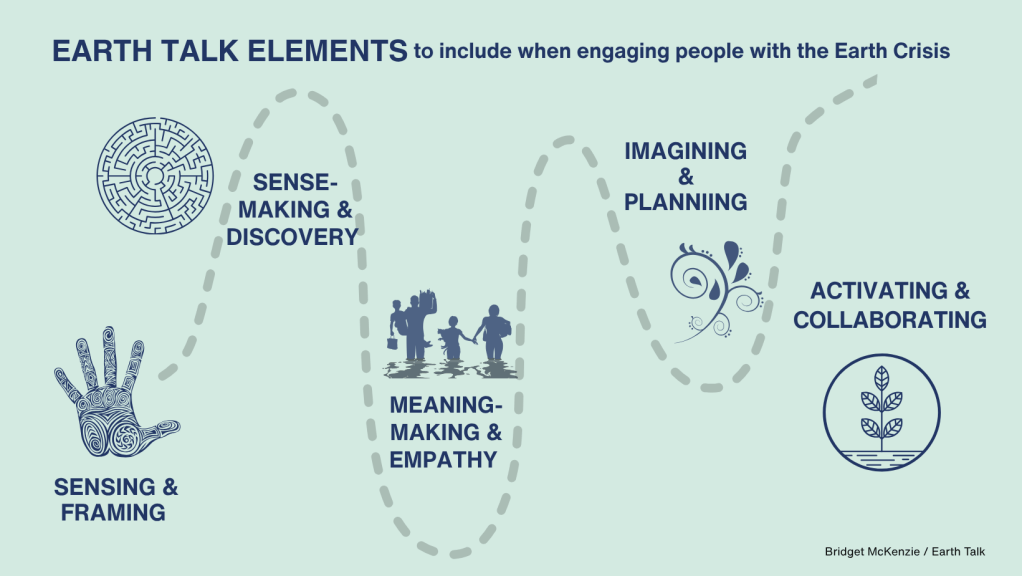
Bridget has launched Earth Talk – a new community of practice for Earth Literacy and activation. It offers 8 course modules, masses of resources for running activities with people, monthly peer support calls, a network space on Hylo, mentoring and a podcast of practitioner interviews. https://earth-talk.org/
THINKING LIKE AN ANCESTOR
As we get into the Autumn, who is up for a bit of storytelling? Justine Boussard ran an environmental storytelling workshop for the Happy Museum Project last July, with a special introduction to Long Time Thinking by Ella Saltmarshe, founder of the Long Time Project. Videos of Ella’s intro and Justine’s Story of the String of Gold Beads and storytelling methodology are now available online, with some reflections from workshop participants collated by Hilary Jennings. The Amateur Ancestor Project started as a response to the Long Time Project, so having Ella’s support for the session was pretty special, and she was as fascinating as ever. https://happymuseumproject.org/thinking-like-an-ancestor/

