The big WHY?
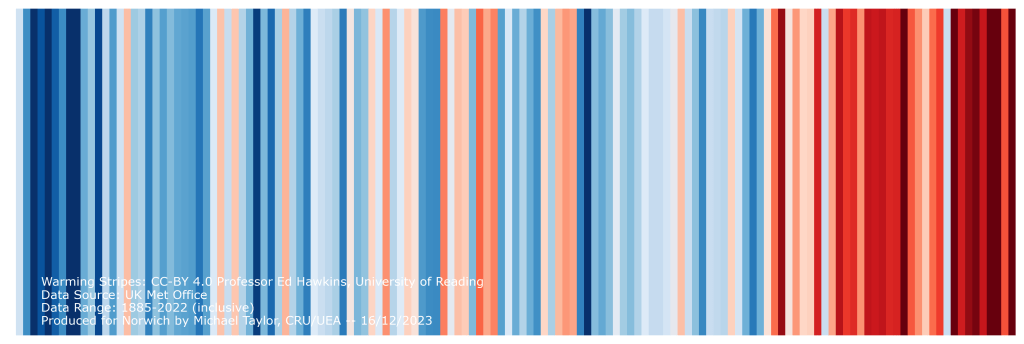
The Earth Crisis! Humanity faces the linked catastrophes of:
- climate breakdown
- a mass extinction of vital biodiversity due to deforestation and climate change
- a degradation of ecosystems health everywhere, with our air, our rivers and oceans, and our food-chains full of plastic, chemicals and other pollutants, leading to human health epidemics and pandemics.
Linked to all this is rapidly rising inequality within and between nations, the deterioration of democracy and human rights, and an increase in wars. Altogether, we call this the Earth Crisis. This is worsening injustices faced by people in the Global South, indigenous land defenders in particular, and it is intensifying inequalities experienced in every country.
Why culture?
There is growing recognition of the contribution of arts, design and heritage to prompt shifts in the ways we relate to one another and the world, in our values and behaviours. The Earth Crisis is a cultural and systemic problem. There is a growing international movement for the Cultural sector to respond to this emergency.
However, there are some problems:
- There is very little funding and support for Cultural work in response to the Earth crisis. (Only 4% of philanthropy is for the environment, mostly to animal welfare. UK public funding for the Arts is amongst the lowest in Europe.)
- There is tentativeness about the radical approaches needed, such as tackling the political influence of the fossil fuel industries.
- There is a general lack of ecocentric thinking across all professional sectors.
Read The Roles of Culture in Response to the Earth Crisis by Bridget McKenzie for more context.
Why a Climate Museum?
Some might assume that museums are stores of past things and about stories of past times, inappropriate for the Earth crisis as a story of now and the future. But museums can be vitally alive places, where questions and meanings are debated, past interpretations challenged, connections are made, people are transformed and solutions are found.
We have not prioritised the development of a traditional museum, displaying collection items in a building. Instead, we have aimed at creating pop-up experiences and micro-museums, in partnership with museums, heritage sites or community organisations.
So, what is our mission?
We are a group of artists, designers and educators who help people make sense of environmental issues through creative conversations. We hold activations, not exhibitions: pop-ups and workshops in museums and communities across the UK. Using art, stories and sites, we help people know how to act and open their imaginations to better futures. Our offers for schools and young people are distinctive by drawing on heritage and arts to engage them with environmental issues and their futures. With our wealth of expertise, we also run training for artists, educators and heritage professionals.
What is our vision?
- We aim to become a resilient distributed organisation, seeding regenerative culture in local places with our collective members developing skills to run activational experiences across the UK.
- Through our work with schools and teachers, we will fill gaps in provision by applying arts and history to environmental education.
- Through our professional training programme, we will tackle a lack of skills in public engagement for Cultural and environmental professionals, and anyone who wants to develop these skills.
- We will also grow our digital collections, toolkits and online interactions as a commons to share learning as widely as possible and to reinforce the museum-like nature of our work.
What are our values?
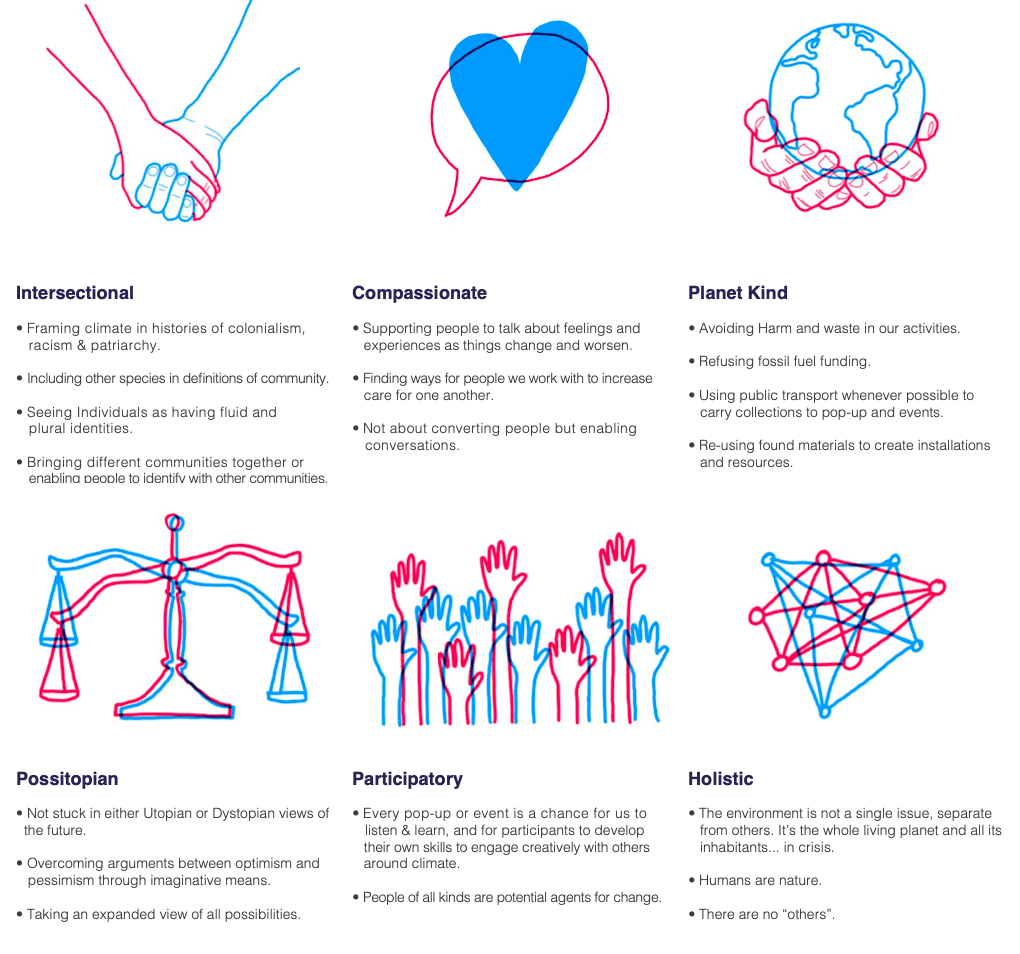
- Holistic in our worldview, seeing the interconnectedness of environmental and social problems.
- Compassionate in our relationships, creating space for the lived experience and emotional dimensions of the crisis.
- Acknowledging the intersectionality of people’s challenges, and the structural barriers to participation in culture and activism.
- ‘Possitopian‘ in the way we see the future, generating active hope while facing the challenges of the crisis.
- Planet-kind in our practices, reducing our negative footprint and increasing our positive handprint.
- Participatory: conversations are at the heart of our practice, rather than educating or ‘speaking to’ people.
 Climate Museum UK